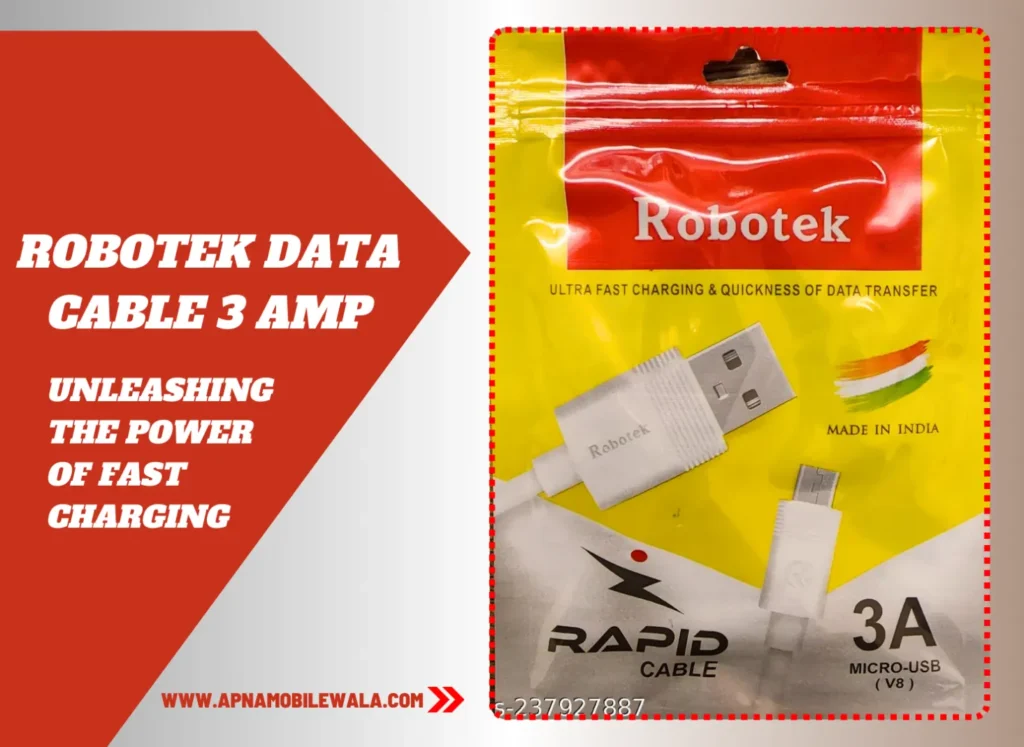

The Ambrane Unbreakable 3A Fast Charging Type-C Cable (Model RCT-15 / RCT15A) features a heavy-duty nylon-braided outer jacket, reinforced strain-relief joints, and support for up to 3A/18W–27W charging speeds.
Direct Recommendation (BLUF): Yes, it is worth buying for smartphone users on a budget. It offers exceptional mechanical durability and reliable fast-charging for mainstream Android devices (Qualcomm Quick Charge 3.0, basic USB-PD up to 27W). However, laptop users or flagships requiring 65W to 100W PD should skip this cable and opt for a 5A E-Marker Type-C to Type-C cable instead.
TECHNICAL ANALYSIS & BUYING GUIDELINES
Fast Charging Standards Explained
Navigating fast-charging jargon can be confusing. Here is how the dominant protocols function:
- USB-PD (Power Delivery): The global, open standard used by Apple, Google, and modern laptops. It dynamically negotiates voltage (5V, 9V, 15V, 20V) over Type-C to Type-C connections.
- PPS (Programmable Power Supply): An advanced extension of USB-PD used by Samsung (Super Fast Charging) and Pixel. It allows real-time step-downs in voltage and current (in 20mV increments) to maximize charging speed while minimizing heat.
- Qualcomm Quick Charge (QC 2.0/3.0): Legacy fast-charging standard primarily running over USB-A to Type-C ports. Ambrane’s 3A cable natively supports QC 3.0.
- SuperVOOC / Dart / Warp: Proprietary high-amperage protocols (6A to 11A) used by OnePlus, OPPO, and Realme. These require original brand-specific high-amp cables with extra detection pins; generic 3A cables will drop these devices to standard charging.
Cable Bottlenecks: Why 3A vs 5A (E-Marker) Matters
A high-wattage charging adapter is useless if your cable acts as a bottleneck. Wattage is calculated as: \text{Power (Watts)} = \text{Voltage (Volts)} \times \text{Current (Amperes)}
- 3A Rated Cables (Like this Ambrane 3A USB-A to C): Capped at 3 Amperes. When connected to a standard 5V or 9V power block, max output caps out between 15W and 27W. It cannot safely transmit higher currents.
- 5A / 100W E-Marker Cables (Type-C to Type-C): Require an embedded E-Marker (Electronic Marker) microchip inside the connector. This chip communicates with the power adapter and device to safely authorize power transmission up to 20V/5A (100W) or 48V/5A (240W under EPR standards). Attempting to charge a laptop or flagship phone over a non-E-Marker cable safely caps the power delivery at 60W or lower.
Heating & Thermal Management in Indian Summers
High ambient temperatures in India (35°C–45°C) pose a direct threat to battery lifespan:
- Resistance & Voltage Drop: Thin internal copper wire gauges lead to higher electrical resistance. Higher resistance generates heat directly inside the cable and connector tips, triggering thermal throttling in your smartphone.
- Ambrane Build Quality: Ambrane uses 22-24 AWG power cores and multi-strand copper wire inside its braided jacket. This minimizes resistance during 3A power throughput, keeping thermal buildup under control and protecting your device’s Lithium-ion battery from thermal stress.
Compatibility Matrix
| Smartphone Brand | Native Fast Protocol | Maximum Speed | Supported by Ambrane 3A USB-A Cable? | Recommended Charger Setup |
|---|---|---|---|---|
| Samsung (A & S Series) | USB-PD 3.0 / PPS | 25W – 45W | Partial (Max ~15W–18W via QC/AFC) | 25W/45W Type-C PPS Charger + 5A C-to-C Cable |
| Xiaomi / Redmi / POCO | Mi Turbo / QC 3.0 | 18W – 120W | Yes (Up to 18W QC 3.0) | 18W–33W QC 3.0/3.0+ Adapter |
| Apple iPhone (15 & 16 Series) | USB-PD | 20W – 30W | No (Requires C-to-C cable) | 20W/30W Type-C Power Adapter + C-to-C Cable |
| OnePlus / OPPO / Realme | SuperVOOC | 67W – 100W | No (Requires proprietary 6A/8A cable) | Original SuperVOOC Adapter & Red Cable |
| Laptops (MacBook / Dell / HP) | USB-PD | 45W – 100W | No (Insufficient amperage/connector) | 65W+ GaN Type-C Charger + 100W E-Marker Cable |
Top Recommended Tested Picks
- 1. Budget Pick: Ambrane Unbreakable 3A Fast Charging Cable (RCT-15 / RCT15A)
- Core Specs: USB-A to Type-C, 3A max output, 1.5m length, double-braided nylon jacket, 480 Mbps data sync.
- Ideal For: Daily rugged use on budget-to-midrange Android phones, wireless earbuds, power banks, and micro-USB/Type-C adapters.
- 2. Mid-Range Pick: Ambrane 60W Type-C to Type-C Fast Charging Cable (RCM-11 / Silicon/Braided)
- Core Specs: Type-C to Type-C, 20V/3A (60W USB-PD), 1.2m length, integrated strain relief.
- Ideal For: iPhone 15/16 series, iPad Air/Pro, Samsung Galaxy S-series (25W charging), and ultrabooks up to 60W.
- 3. Premium / Future-Proof Pick: Ambrane 100W 5A E-Marker Type-C Cable (Multi-Device)
- Core Specs: Type-C to Type-C, built-in E-Marker IC, 100W PD (20V/5A), high-density braided sleeve.
- Ideal For: Flagship laptops (MacBook Pro, Dell XPS), 45W Samsung Super Fast Charging 2.0, high-capacity power banks, and multi-device power users.
3. CONCLUSION & BUYER CHECKLIST
Pre-Purchase Checklist
Before spending your money, run through these four technical checks:
- [ ] Wattage & Amperage Matching: Check your device’s maximum charging limit. If your phone or laptop needs more than 27W, bypass standard 3A USB-A cables and purchase a 60W or 100W Type-C to Type-C cable.
- [ ] Port Distribution (USB-A vs. Type-C): Ensure the source end matches your wall adapter’s output port. Modern fast chargers use Type-C outputs, while older wall bricks use USB-A ports.
- [ ] BIS Certification: Always verify that power adapters and bundled electronic cables carry the Bureau of Indian Standards (BIS) mark (CRS registration mark) for electrical surge protection and flame-retardant build quality.
- [ ] Protocol Support: Confirm compatibility between your device’s fast charging protocol (e.g., PPS, SuperVOOC, PD) and the cable/charger combination.
Final Takeaway
The Ambrane Unbreakable 3A Cable excels at what it is engineered for: offering near-indestructible physical durability and affordable 18W–27W charging for everyday Android devices, accessories, and power banks. However, to future-proof your setup for USB-PD laptops and modern flagship smartphones, standardizing on 100W 5A Type-C to Type-C cables remains the standard across the hardware industry.
4. FREQUENTLY ASKED QUESTIONS (FAQs)
Q1: Can I use a 65W laptop charger on a 20W or 25W smartphone? A: Yes, absolutely. Modern smartphones and chargers utilize power negotiation protocols like USB-PD. The charger and phone communicate upon connection, and the wall brick only supplies the maximum power requested by the phone (e.g., 20W). It will not overload or “fry” your device.
Q2: Does fast charging degrade my phone’s battery life over time? A: Fast charging itself does not harm batteries; excess heat does. High-wattage charging generates thermal energy, which can accelerate Lithium-ion chemical degradation if left unchecked. To protect battery health, avoid using your device for gaming while fast-charging, and keep the phone out of direct sunlight or hot environments.
Q3: What is BIS Certification, and why is it important for charging cables in India? A: BIS (Bureau of Indian Standards) certification ensures that electronic products meet rigorous national safety standards. For chargers and cables, BIS testing verifies insulation resistance, fire resistance of plastic materials, and protection against high-voltage mains spikes common in power grids.
Q4: Why won’t my Ambrane 3A cable fast-charge my OnePlus or OPPO phone at full speed? A: OnePlus (SuperVOOC) and OPPO use proprietary low-voltage, high-current fast charging protocols (requiring 6A to 11A). The Ambrane 3A cable is limited to 3A current flow. When connected, your device defaults to a safe 10W–15W standard charging mode to prevent cable overheating.
Thanks for Reading!
Recommemded Post-
- WHOOP 5.0 Review: A Screen-Free Fitness Tracker for India
- Top 5 Calling Smartwatches Under ₹2,000 in India (2026)
- The Ambrane Unbreakable 3A Fast Charging Type-C Cable
- Noise ColorFit Pulse vs. boAt Wave Elevate: Display, Mic Quality, and Battery Life Compared
- Best Portable Rechargeable Mini Fan in India: Compact Cooling for Home, Office & Travel